

- English |
- Français
Issue 35, July 1, 2010
DHL would like to take this opportunity to provide you with an update on the Transpacific East Bound market which continues to experience unprecedented volume demand through the end of June.
Year to date container volumes have increased over 22 % from June 2009 with indications for further volume growth in the second half of 2010. Leading economic indicators such as the North American Purchasing Managers Index (PMI) continued to point to a sustained period of growth for the remainder of 2010 and into next year.
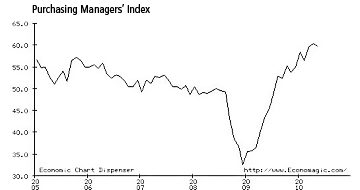
Developing Trends:
Considering the speed at which the market has rebounded, key trends are developing which have an impact on your planning and supply chain performance. While volumes continue to increase, capacity continues to lag behind resulting in record utilization on all vessels with backlogs and equipment shortages appearing at many Asian ports, especially in the North Pacific. Air cargo rates continue to climb pushing additional cargo volumes previously moved by air to ocean transportation. The main drivers behind these trends are:
Capacity and Slow Steaming:
Although carriers have returned most of the capacity withdrawn in 2008-09 except for smaller vessels, slow steaming / extended transit times continue. Most major lines reduced sailing speeds significantly in the first quarter in an effort to reduce fuel costs while returning idled vessels from warm lay up status. This action proved so successful carriers are also considering “super slow” steaming (12 knots vs. the normal 20 knots) schedules which further reduces fuel consumption but could add as much as 20-30% to the round trip transit times.
Equipment Shortages:
As container volumes were not forecasted to fully recover until 2011 or beyond, physical container inventories were planned for replacement at 50% of the typical level while leased containers were aggressively returned for vessels in lay up status. Today these actions are impacting equipment availability in many ports with special use containers such as refers, open tops and flat racks in very short supply. Spot shortages of 20/40/40HC general purpose containers are also reported in many locations both from lack of inventory and extended transit times. As carriers scramble to increase container inventory ahead of peak season an Equipment Imbalance Surcharge (EIS) is being considered by several major lines (JOC-6/16/10). DHL will continue to closely monitor this development and update you in the coming weeks.
Air Cargo Pricing:
Industry source Drewry Shipping Consultants reported their Shanghai Air Freight Price Index moved sharply higher in April, to similar levels as seen in December 2009. While air cargo volumes increased 25% in April, carrier capacity grew by only 3% driving the index to 134.4 or 64% higher than the same month a year ago. The Drewry Air Freight Price Index is built on the average all-in rate for exports out of Shanghai to several locations. Higher air cargo rates are motivating customers to shift their air cargo to ocean transport to avoid the higher air costs.
Planning for Q3
DHL believes our customers need to be aware of these developments to better cope with the changing market environment and minimize the impact to their supply chain. Going into the traditional peak volume season, DHL is taking the following actions to ensure our customers have time to plan and prepare:
Increased Carrier Allocations:
DHL has increased our fixed carrier allocations by more than 30% since January. Despite this, growing volumes will likely require better usage of existing capacity and sourcing additional capacity to meet your needs.
Improved Capacity Management:
Currently the industry is experiencing a high level of overbooking as customers seek to ensure capacity resulting in a “No Show” rate of up to 25%. As a result badly needed capacity is wasted and other customers face unnecessary delays. In response DHL has deployed a robust booking and allocation tool which ensures visibility to your bookings and capacity needs. With DHL it is not necessary to over book your cargo to ensure loading, making better use of our existing capacity.
Customer Specific Allocations:
To provide our customers with a capacity guideline, existing customers on the TPEB will be offered space allocations by point pair. Our capacity offer will be linked to your actual volumes shipped with DHL from November 1, 2009 to April 30, 2010. Please discuss specific space commitments with your DHL Sales Representative to ensure these guidelines are in line with forecasted volume.
Utilizing Extra Loaders:
Extra Loaders are irregular services offered by carriers when port back logs reach high levels. These are ad hoc opportunities and will be offered to our customers at the prevailing market rates. Please note market rates for these services will vary from ship to ship.
DHL Trans Load alternatives:
While capacity is very tight to all Inland points, we will be able to secure more space to Vancouver on a regular and irregular basis allowing us to offer our Trans Load services by rail/truck direct to consignee designated delivery points. Rates for this service will be offered on a shipment by shipment basis depending on the delivery location.
At DHL we realize the coming peak season will be a challenging one with careful planning and coordination being the key to our mutual success. Rest assured we are doing all possible to plan ahead to meet your capacity needs while developing alternative solutions. By keeping you informed of changing market conditions, working closely together to match your forecasts and allocations and providing new capacity solutions, DHL is committed to providing the type of market leading service you’ve come to expect.
Chris Gonsowski
Vice President Products & Services
Canada
Tom Cichon
Ocean Freight Director
Canada

